By morning, the board shows shortlisted tenders, risks flagged
Tender Agentworking testbedtestbed
The agent finds tenders by set rules, reads the documentation and contract, flags risks and writes a summary. The manager still makes the call.
The demo is taking a while to load. Open in a new tab
The problem
There are plenty of tenders and few good fits. To decide whether to bid, you have to open the technical specification and the draft contract – dozens of pages per tender.
A manager spends the day reading instead of bidding. A key condition – installation, advance payment, bid security, delivery time – is easy to miss in the middle of a document.
Why I built it
In previous jobs I ran public tenders under Federal Laws 44-FZ and 223-FZ and saw how many hours went into finding tenders and reading documentation. The agent takes over that routine and leaves the decision to a person.
Who it’s for
-
Tender manager
Pain: The day goes on reading specs and contracts, not on bids
Gets: In the morning: tenders sorted by deadline, the noise already filtered out
-
Head of Sales
Pain: Tender links fly around messengers; nobody knows who took what
Gets: One board: who took a tender and when it’s due
-
Supplier under 44-FZ / 223-FZ
Pain: Installation or an advance payment is easy to miss mid-contract
Gets: Terms quoted word for word; people make the decision
How it works
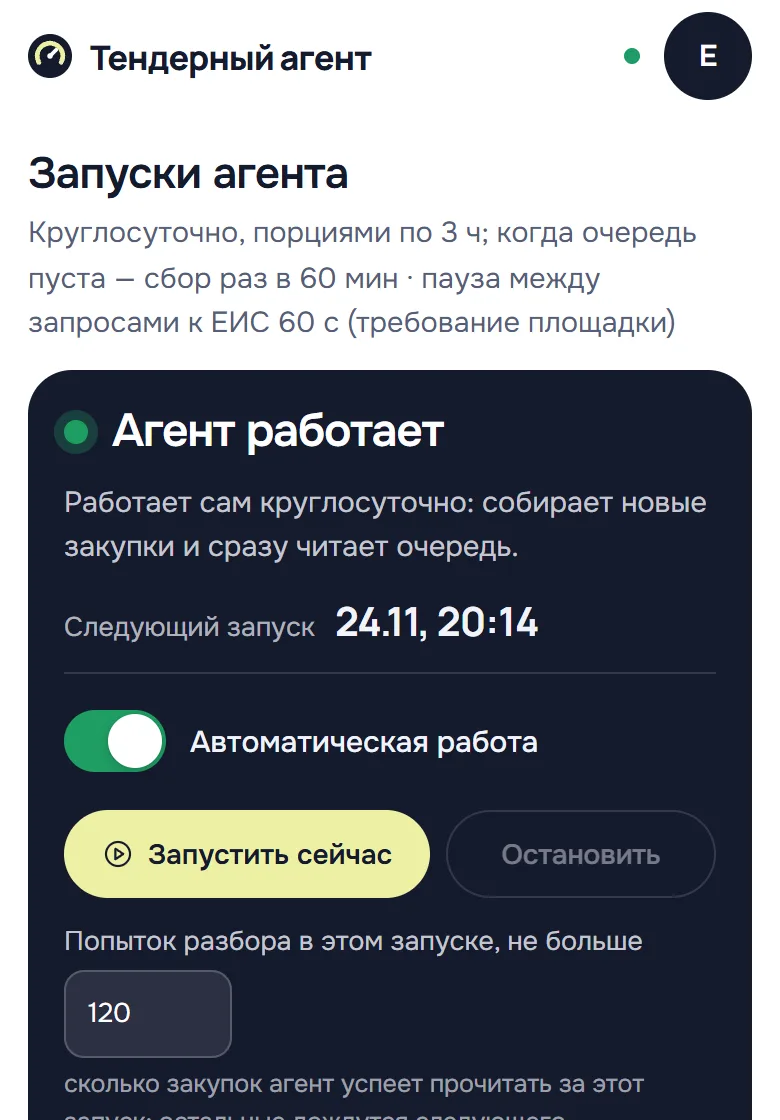
In the evening the agent goes through EIS, the official procurement portal, and collects 44-FZ / 223-FZ tenders – only what is new or has changed since last time.
Unsuitable tenders are filtered out by the company’s rules. Rejected ones sit in a separate tab with the reason and can be put back on the board.

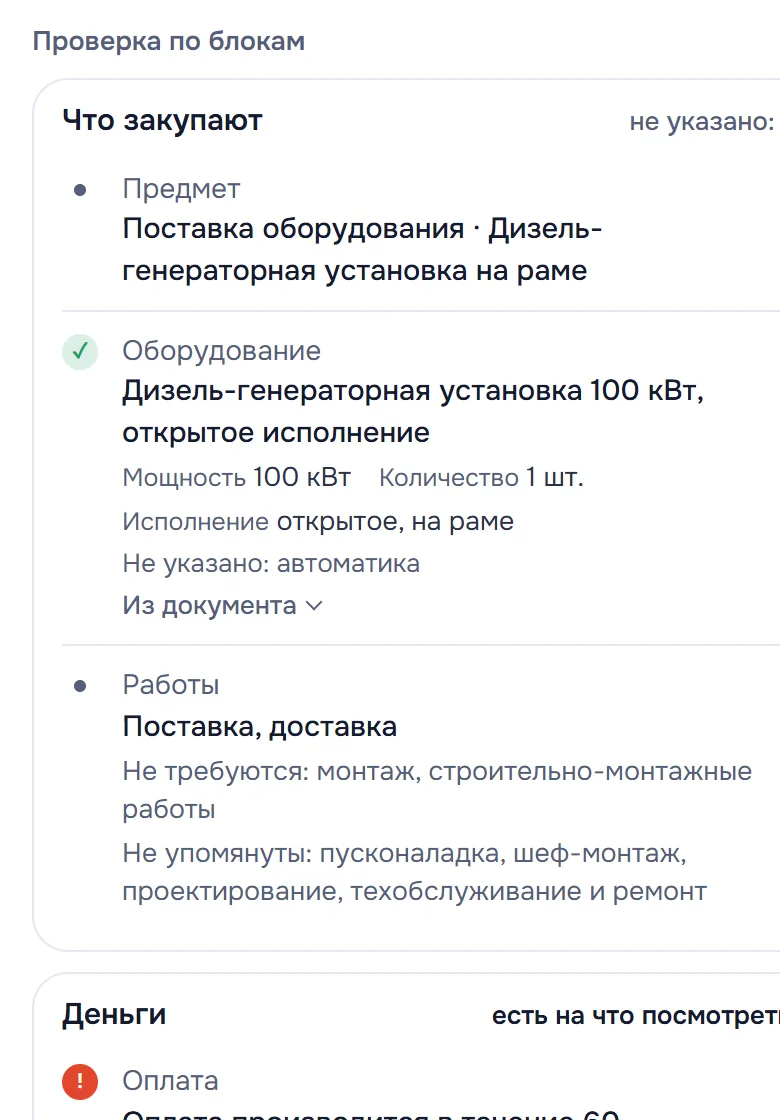
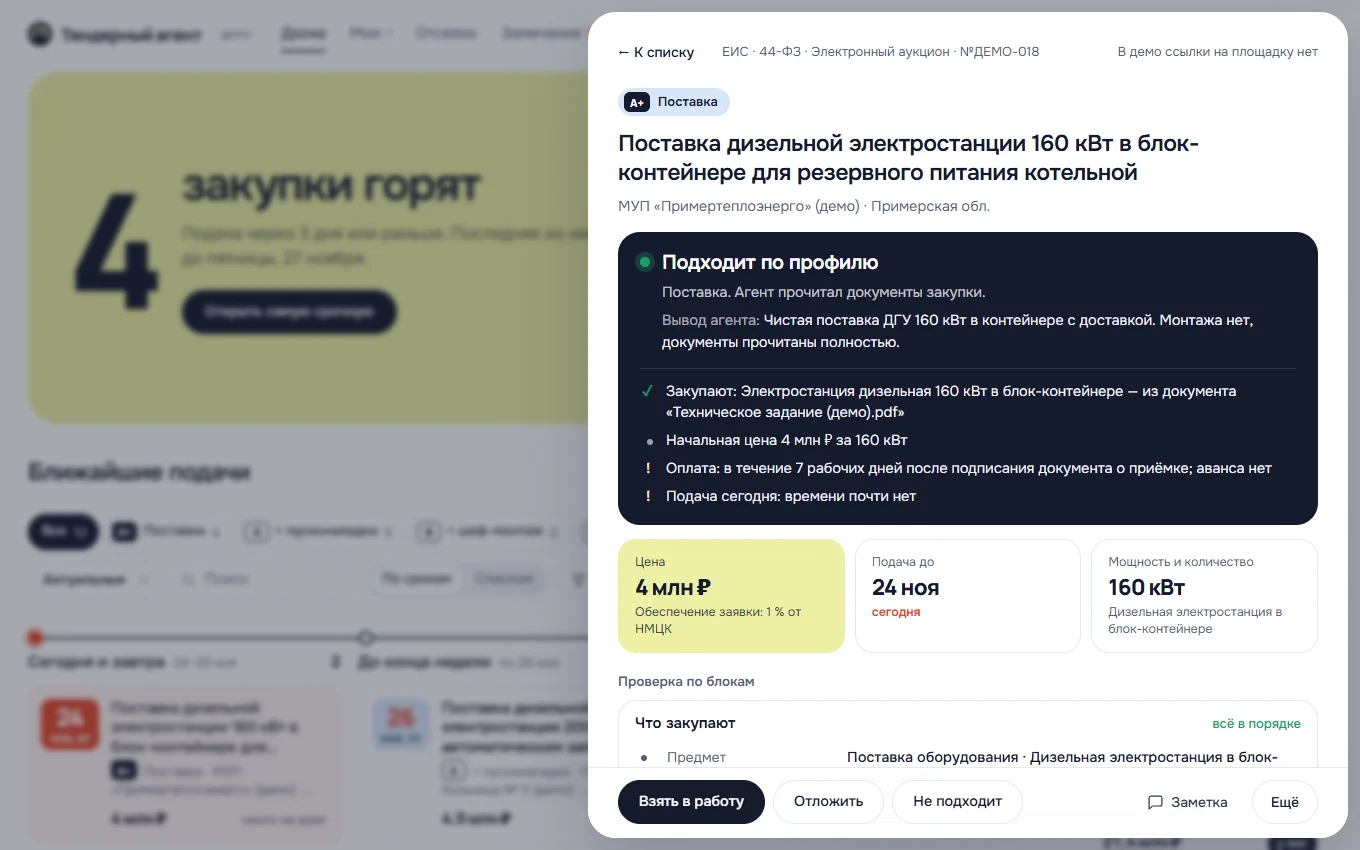
The agent downloads the specification, contract and notice, extracts the terms as verbatim quotes and checks that every quote really appears in the text.
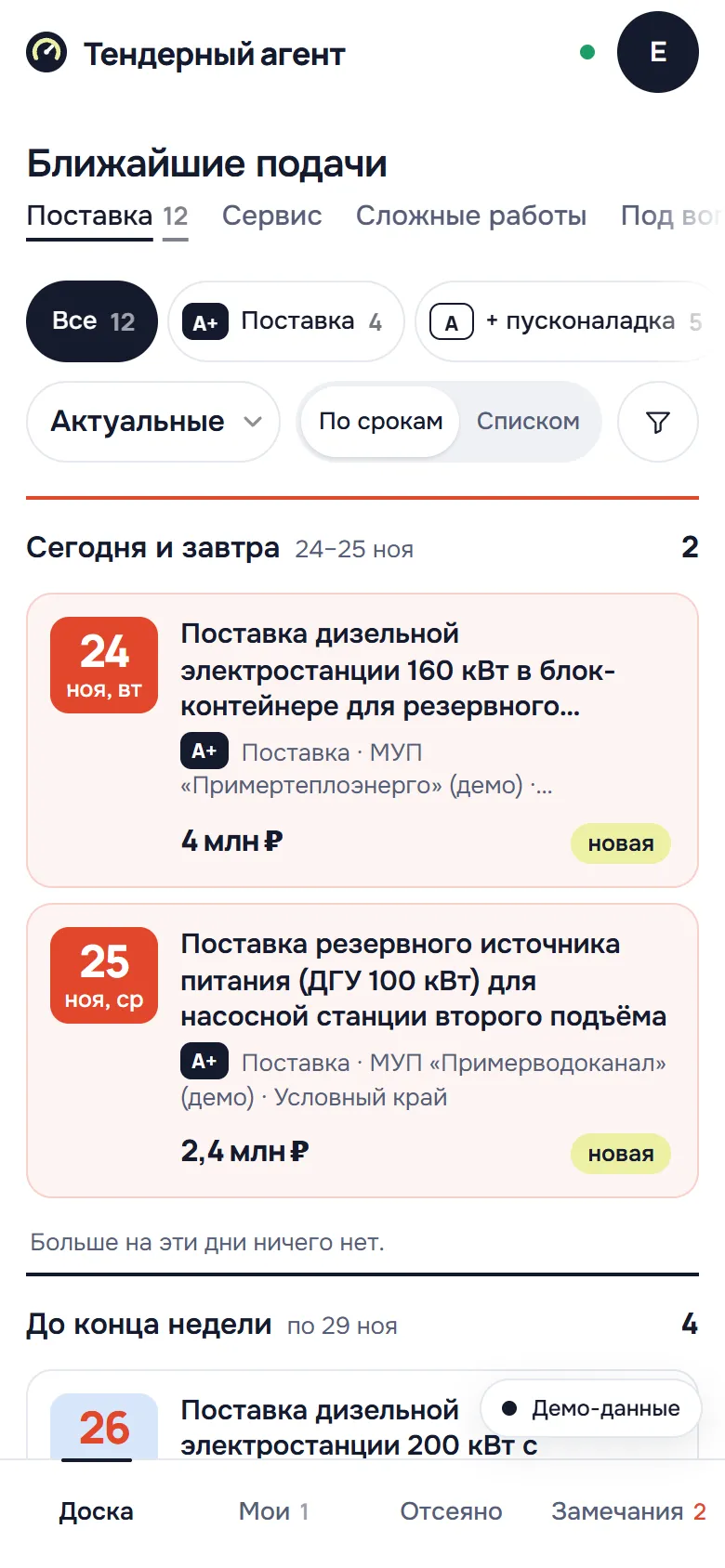
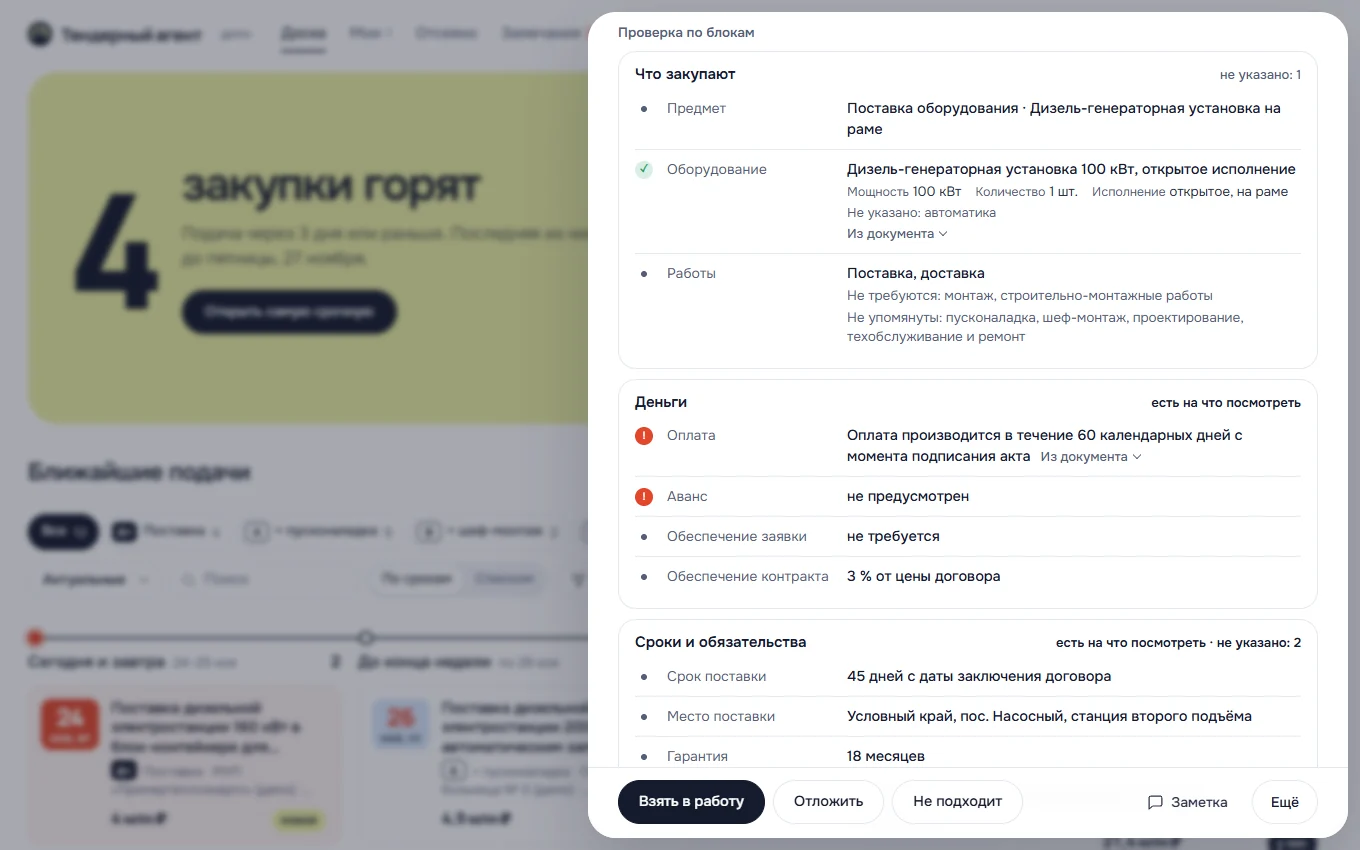
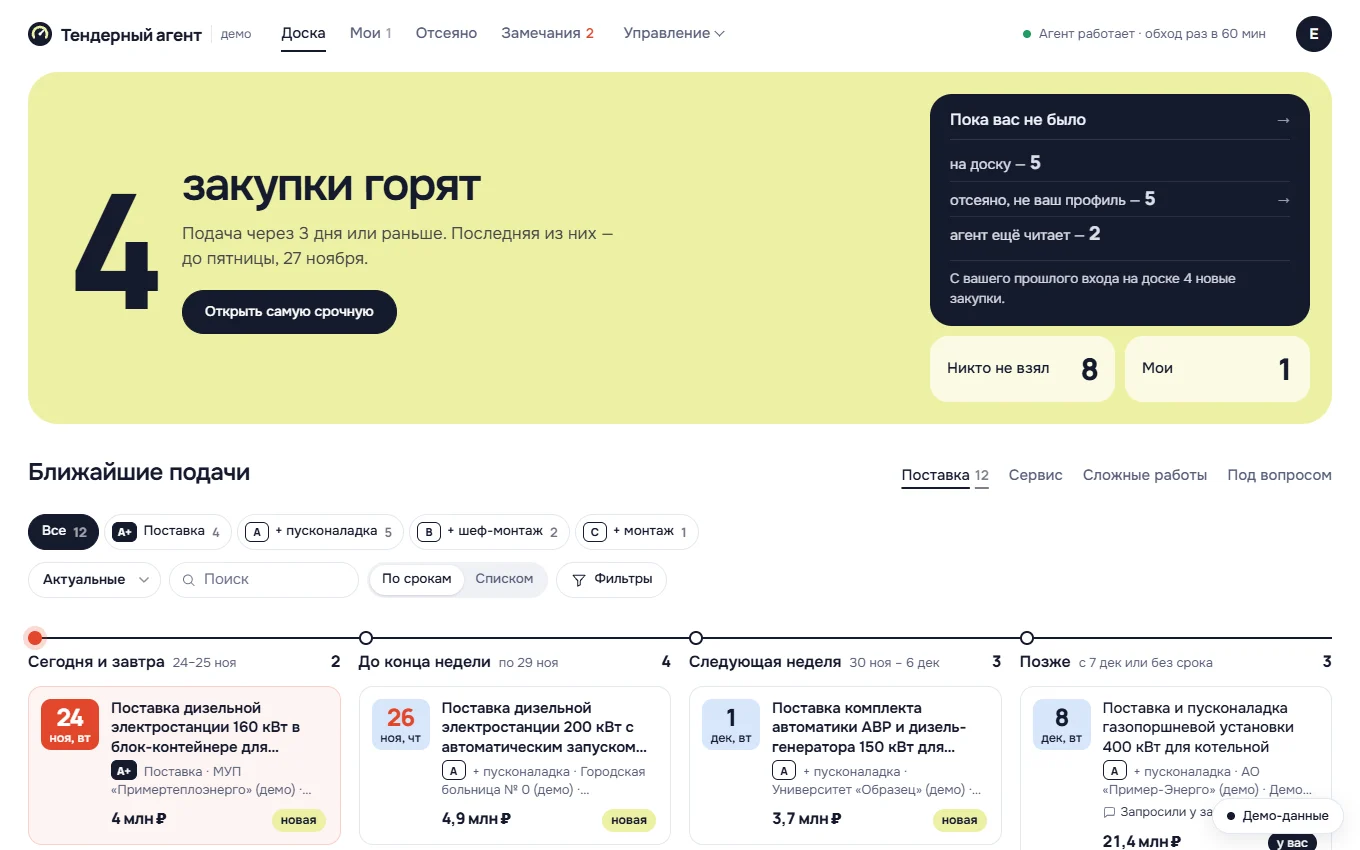
In the morning the manager sees tenders by submission deadline: urgent, this week, later. Each card holds the agent’s verdict, the terms and what to watch out for.
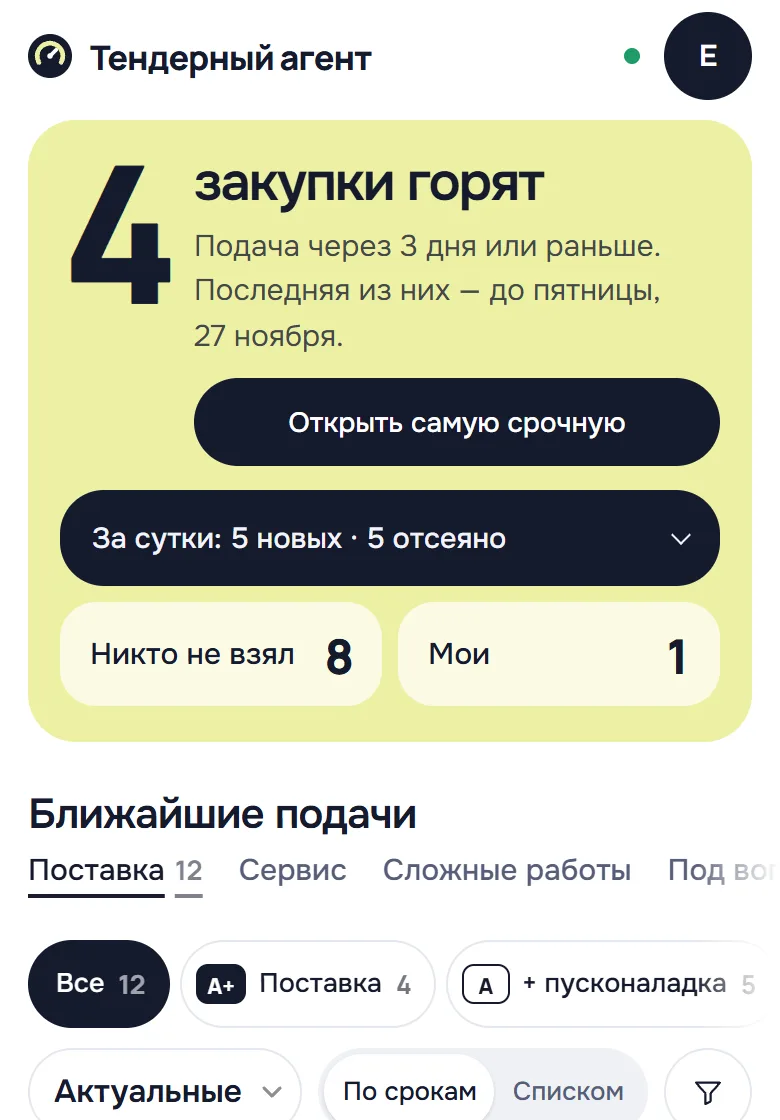
A manager claims a tender or marks it “Not a fit” with a reason. Everyone sees changes at once, and the rejection reasons help refine the rules.
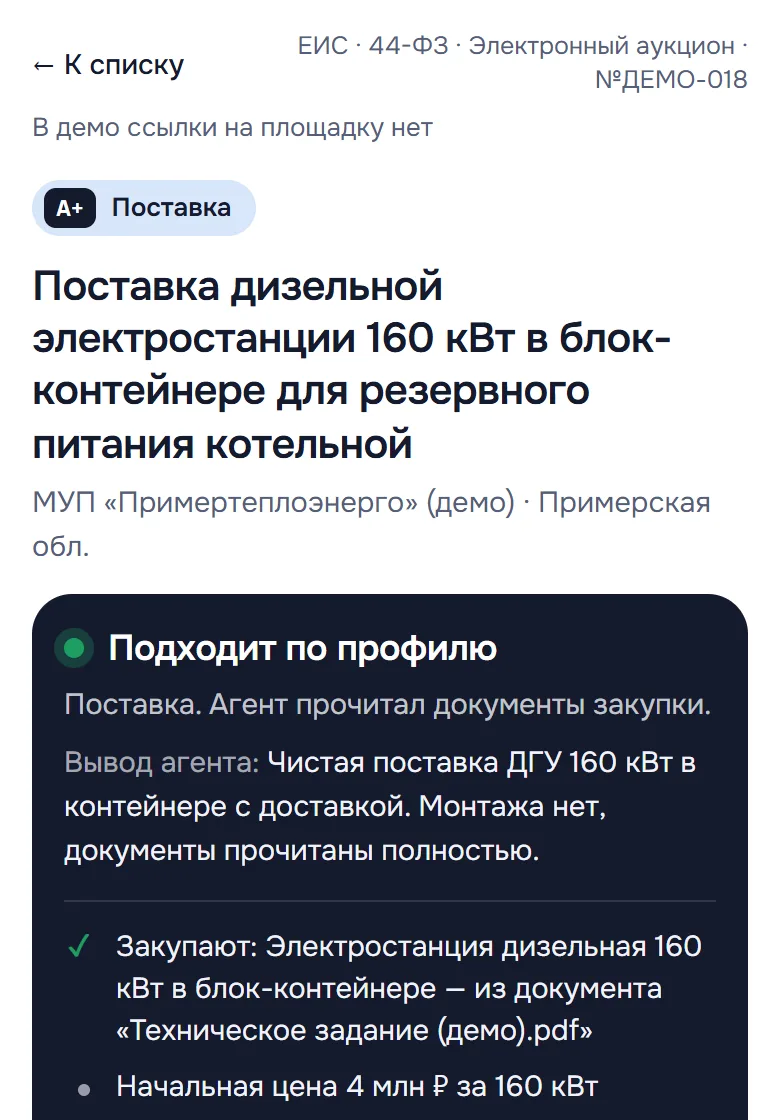

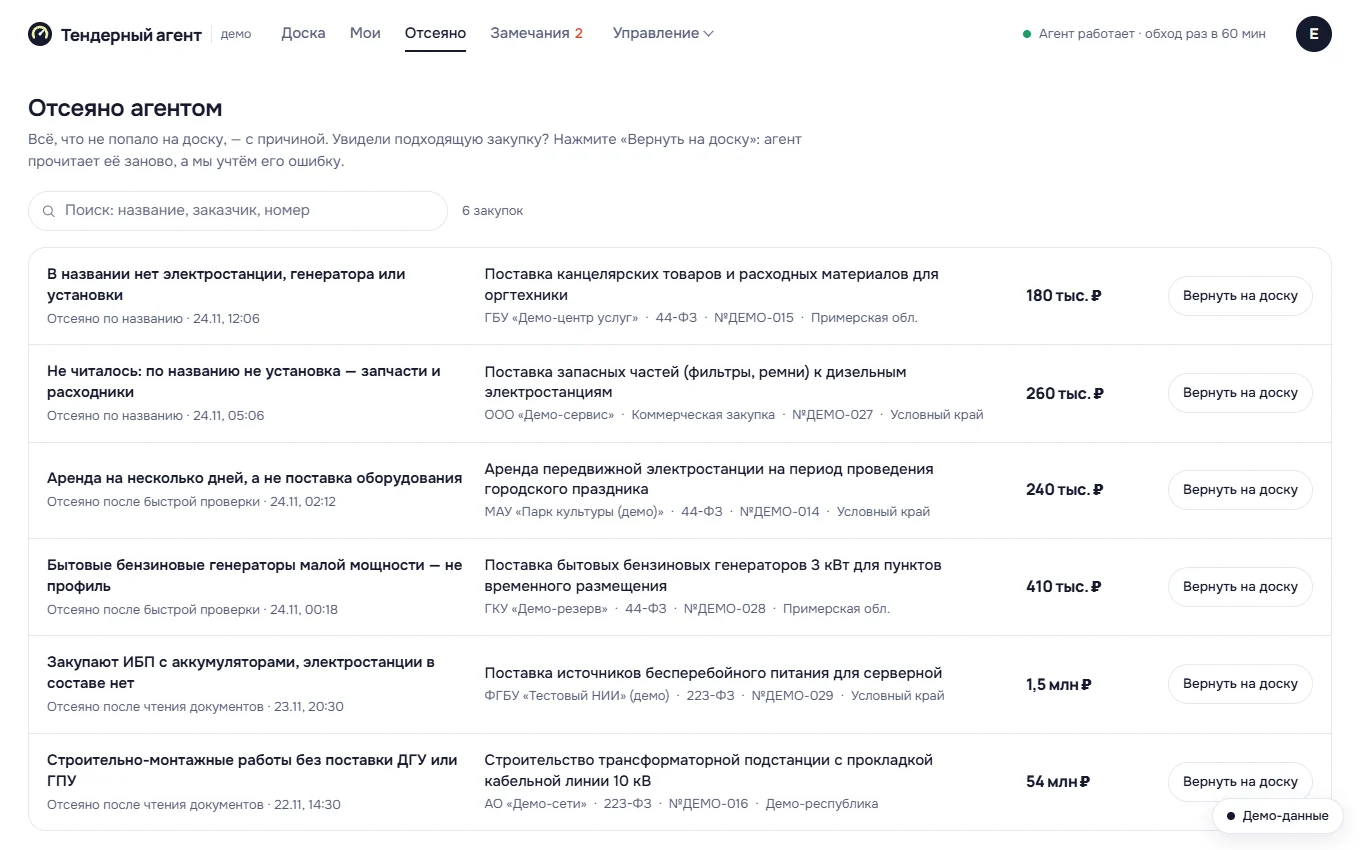
Before after
-
Before: Managers browse the portal and open every tender by hand
After: Overnight, the agent scans the portal and filters out the noise
-
Before: Terms are hunted down by eye across dozens of pages
After: Terms are extracted with quotes from the document
-
Before: Tender links forwarded back and forth in messengers
After: One board: who took what and when it’s due
Stage: testbed
- idea
- prototype
- demo
- testbed
- pilot
- in use
The agent runs on a testbed with real tenders. Document review on the live feed is still being tested.
- Processed 550 tenders in its first week
- Live demo on made-up data
What’s next
Pilot in preparation